

Holiday Rituals and Everyday Moments
How simple, meaningful traditions keep our connections strong.
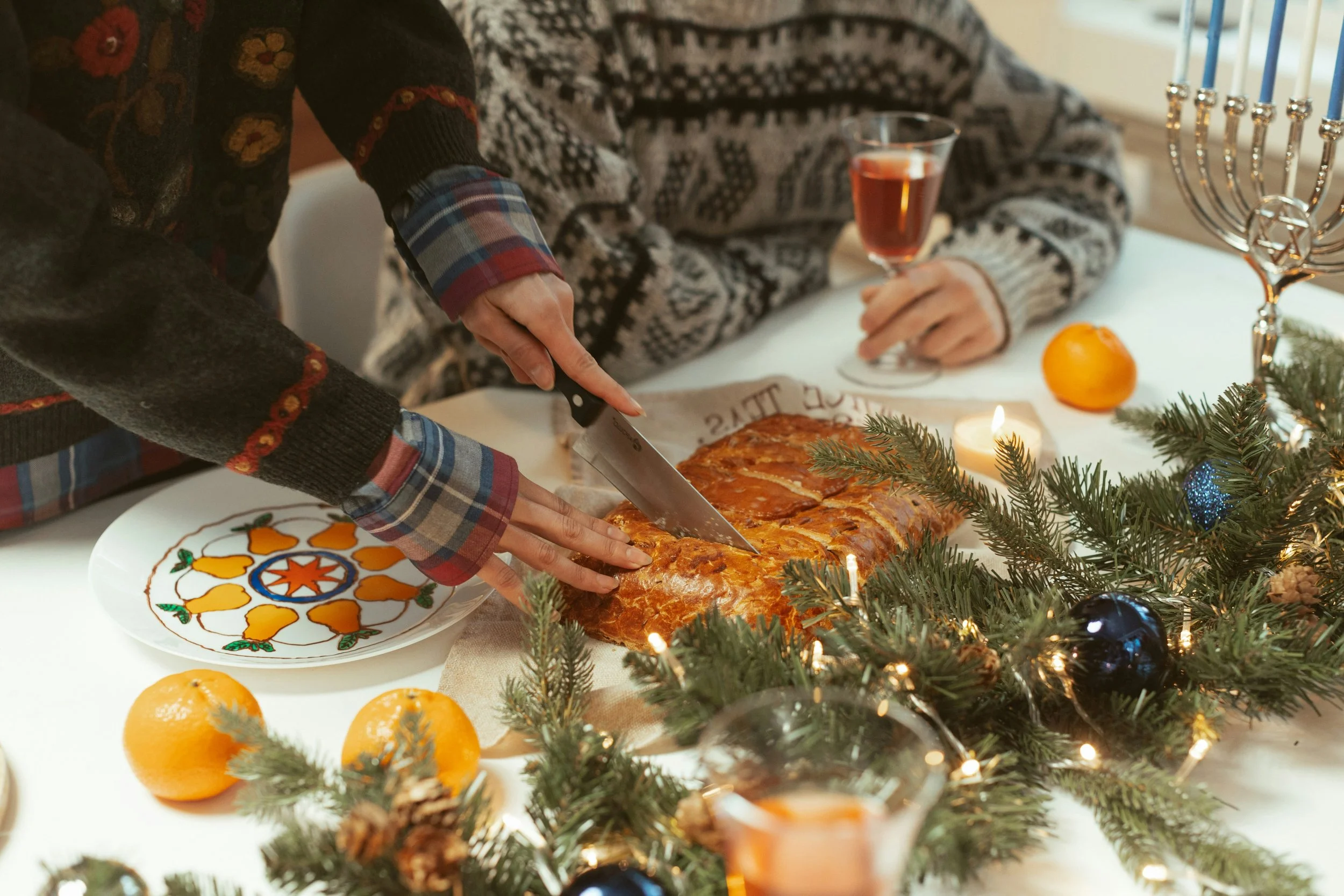
Photo by Rabbi Aryeh Cohen
Holiday Rituals and Everyday Moments
How simple, meaningful traditions can keep our connections strong.
Last December, Jason and Maya fought about saying yes to too many holiday events. This year, they’d cut back. Things were calmer, but after a Friday attending her sister’s dinner and a Saturday at his family’s brunch, something still felt off. (1)
Everything was fine, but it wasn’t theirs.
The next morning while wrapping gifts, Maya spoke up. “It’s better this year, but I still feel like we’re just doing other people’s holidays.”
Jason paused. “Do you remember when we made that challah with chocolate chips? You called it sacrilegious, and I called it genius.”
She smiled. “It was both.”
“Let’s do more things like that,” he said.
The next weekend, they made the challah together, and Maya posted a holiday reel of his chocolate chip technique.
Holiday Rituals: A Reflection of Your Identity
The Gottman Method, which I use in my couples therapy practice, encourages couples to craft holiday rituals that celebrate their shared humor, values, and personality. (2) In addition to being festive and fun, over time they can become traditions that build closeness and shared meaning.
For example, instead of cutting down a Christmas tree, some couples opt for a live, potted tree that they plant after the season. Others might visit the aquarium during Passover or take an annual drive to admire autumn leaves. Traditions don’t have to be conventional. The best ones reflect what makes your partnership feel like you.
To create meaningful holiday rituals, start by evaluating your current traditions:
· Keep what brings joy. Hold onto rituals that leave you feeling peaceful, fulfilled, and closer to loved ones.
· Let go of the rest. Traditions that create stress or feel obligatory can detract from the spirit of the season.
Let the holidays reflect your couple identity. Whether it’s a quirky activity, a heartfelt tradition, or something entirely new, these intentional moments can create lasting memories and strengthen your bond.
Conflict and Compromise Around Holiday Rituals
Of course, creating rituals together isn’t always seamless. Even couples who are deeply aligned can clash when it comes to creating or modifying holiday rituals. One partner might feel pulled toward preserving childhood traditions while the other feels burdened by expectations. Sometimes it’s cultural. Sometimes it’s logistical. Sometimes it’s just that one person thrives on novelty and the other finds comfort in repetition.
Couples research suggests that when conflict around rituals arises, it’s often because deeper needs and values are going unspoken. 3 One partner might long for quiet connection while the other finds joy in large gatherings. Naming those unspoken dreams is the first step toward creating rituals that meet both partners' needs.
Here are a few strategies:
Use a softened startup. “I know this matters to you, and I want to find something that works for both of us,” lands better than, “Why do we always have to do it your way?”
Get curious about symbolic meaning. Ask each other: What does this tradition represent to you? Is it about family, legacy, autonomy, joy?
Co-create a blended ritual. If one partner wants to attend the extended family dinner, can the other choose a private ritual for the following day?
Take turns or alternate years. Sharing influence builds trust. So does being willing to say, “This year, let’s do it your way. Next year, mine.”
Compromise means making space for both partner’s needs. When couples can talk with curiosity instead of defensiveness, they often find flexible ways to honor both partners’ core needs—and end up creating something new that reflects who they are together.
Conflicts around holiday rituals often reveal an absence of everyday connection. When couples lack regular rituals of closeness, holiday stress can feel amplified. That's why building daily practices of connection matters just as much as seasonal traditions.
The Science Behind Connection
From a neuroscience perspective, rituals reduce cognitive load and increase emotional safety. (4) They offer predictability, something our brains crave, especially in moments of relational stress or ambiguity. When we know what to expect (walking downtown on Friday night, decompressing together after work), we’re less likely to default to defensiveness or distance.
Rituals also help encode memories. (5) When an action is repeated in a meaningful context, it becomes emotionally sticky. That’s how small moments (Saturday pancakes, a holiday playlist, walking the dog together) start to carry symbolic weight. They say, “We do this because it’s us.”
And they serve a regulatory function too. Rituals help regulate us physiologically. (6) A familiar gesture or moment at the end of a hard day (a hand on the shoulder, shared tea, even brushing teeth side by side) can calm the nervous system. Over time, that calm becomes connection.
Building Your Everyday Rituals
While holiday rituals offer a yearly opportunity to reconnect, everyday rituals are the glue that keeps relationships strong throughout the year. Check-ins over morning coffee, a shared playlist during the commute, or bedtime routines that help us wind down together are all small acts that create connection in the midst of the everyday.
Daily touchpoints. These are the small moments of connection that bookend your day. When they’re intentional, they reinforce a sense of we’re connected, even in the rush of daily life.
· Warm Reunions: A hug, or a simple "How was your day?" when reuniting after time apart makes your partner feel valued and sets the tone for connection.
· Leave-Taking Rituals: Start the day with a meaningful goodbye: a kiss, or words of encouragement to carry your connection with you.
Stress-reducing conversations. Setting aside 10 minutes a day to talk about external stressors can be a powerful buffer against disconnection.
· Take turns sharing. This isn’t the time to raise relationship concerns. Focus on things like work, family, or daily frustrations that occur outside the relationship.
· Listen with empathy. Try to put yourself in their shoes, not solve the problem. Great listening builds emotional safety and sends the message that their experience matters.
Shared activities. Doing things together, even mundane things, builds a rhythm of partnership. The activity itself matters less than the meaning you create through it.
· Mealtimes Together: Share the highs and lows of your day over meals to encourage meaningful conversation and reconnection.
· Evening Rituals: Even if you go to bed at different times, take a moment to share a kiss, a hug, or a brief chat to close out the day together.
· Weekly Date Nights: Set aside time for just the two of you. It doesn’t have to be extravagant. A cozy night in or a walk in the park can do wonders.
Special Occasions and Long-Term Traditions
Beyond daily rituals, long-term traditions offer opportunities to deepen your connection:
· Vacations. Plan getaways that recharge you both, whether it’s a family trip, a staycation, or a romantic weekend for two.
· Celebrations. Create meaningful rituals around birthdays, anniversaries, or other milestones that reflect your values and bring joy.
· Intimacy Rituals. Openly discuss your preferences for physical and emotional intimacy. Scheduling time for intimacy can be just as intentional and fulfilling as other rituals.
Making It Yours
Jason and Maya didn’t overhaul their holidays, but after that night baking challah, something clicked. It wasn’t just fun. It felt like them. In their next therapy session, they realized it could be a thing: regular night to slow down, bake something, and reconnect.
So they made it a ritual. Nothing fancy. Just one evening a month, dough on their hands, phones off and in a drawer, and a little music playing in the background.
Rituals of connection, whether daily or seasonal, are powerful tools for maintaining closeness in a relationship. They help couples stay grounded, aligned, and emotionally connected, even amidst life's inevitable busyness.
This holiday season, ask yourself: What would make this feel like ours?
1 Client vignettes are drawn from real cases in my therapy practice. Names and other identifying information have been changed to protect privacy and confidentiality.
2 Gottman, J. M., & Gottman, J. S. (2015). 10 Lessons to Transform Your Marriage. (Chapter 7: “Build Shared Meaning & Rituals of Connection”). New York, NY: Crown Publishing.
3 Pearson, J. C., Child, J. T., & Carmon, A. F. (2011). Rituals in dating relationships: The development and validation of a measure. Communication Studies, 62(2), 121‑140.
4 Hobson, N. M., Schroeder, J., Risen, J. L., Xygalatas, D., & Inzlicht, M. (2018). The psychology of rituals: An integrative review and process‑based framework. Personality and Social Psychology Review, 22(3), 260‑284.
5 Garcia‑Rada, X., Sezer, O., & Norton, M. I. (2019). Rituals and nuptials: The emotional and relational consequences of relationship rituals. Journal of Consumer Psychology, 29(2), 320‑333.
6 Brooks, A. W., Schroeder, J., Risen, J. L., Gino, F., Galinsky, A. D., Norton, M. I., & Schweitzer, M. E. (2016). “Don’t stop believing: Rituals improve performance by decreasing anxiety.” Organizational Behavior and Human Decision Processes, 137, 71‑85.